Quick answer: are sprouted potatoes safe to eat?
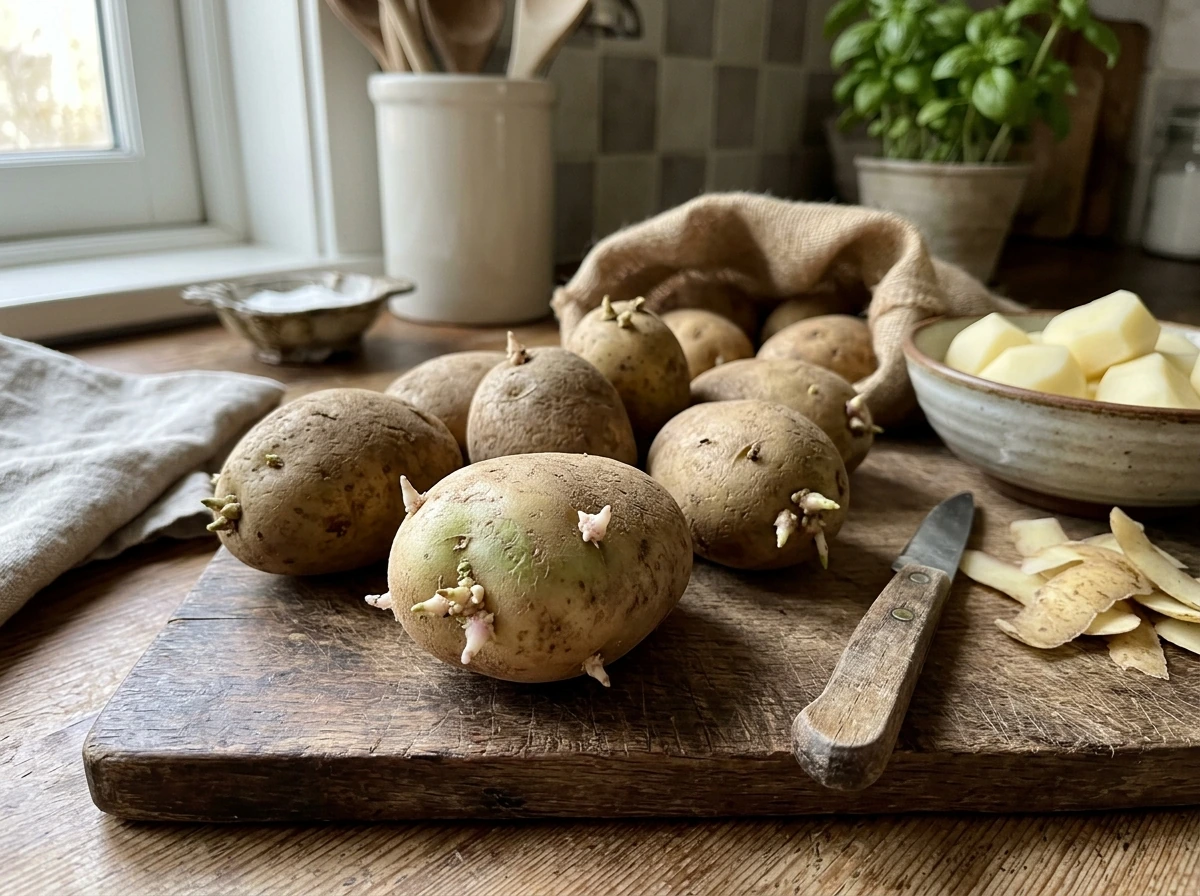
Yes, with conditions. A potato that has grown a few small sprouts at the eyes is generally still safe to eat if the potato itself is firm, shows no deep green coloring, and the sprouts plus any surrounding green-tinged skin are cut away completely before cooking. What makes a sprouted potato dangerous is not the sprout itself but two naturally occurring compounds called solanine and chaconine. These are glycoalkaloids the potato produces as a defense mechanism when it's stressed by light, damage, or the sprouting process. As long as those levels haven't climbed too high, the potato is still food. Once they have, it's compost.
The tricky part is that you can't taste a dangerous dose coming until it's already too late in some cases. Solanine and chaconine don't break down when you cook them. Boiling, baking, frying, microwaving: none of it destroys these compounds. That's why you can't just cook a green potato long enough to make it safe. The decision has to be made before it goes in the pot.
How to tell if your sprouted potatoes are too toxic
There are a few reliable indicators you can assess in about 30 seconds. Think of it as a quick triage before you commit to cooking or composting.
Check the skin color first
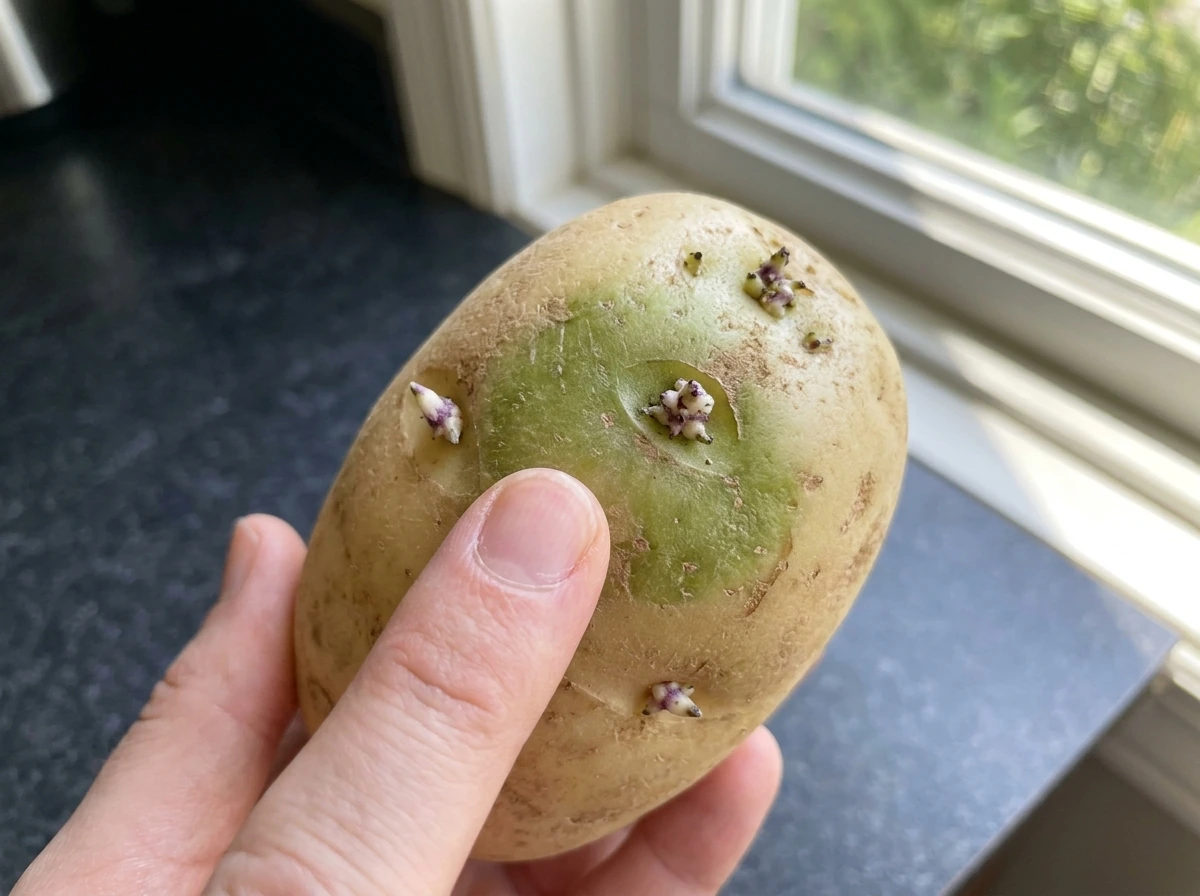
Green pigmentation under or on the skin is your biggest warning sign. The greening itself is chlorophyll, which is harmless, but chlorophyll forms under the same conditions that cause solanine and chaconine to spike. So green skin is a reliable proxy for elevated glycoalkaloids. Glycoalkaloids concentrate heavily in the skin and outer layers of the potato: the peel makes up only about 2 to 3 percent of the tuber's weight, but it can contain 30 to 60 mg of glycoalkaloids. If the green is just a faint tinge on the surface, peeling deeply may bring it back to a safer level. If the flesh itself is green when you cut it, you're past the point of salvage.
Feel it
A firm potato with small sprouts is a much better candidate than a soft, shriveling one. Softness and wrinkling mean the potato has been stressed for a long time and has likely been producing glycoalkaloids the whole time. If it's squishy, has any rot starting, or feels hollow in spots, throw it out.
Taste a tiny piece after peeling (with caution)
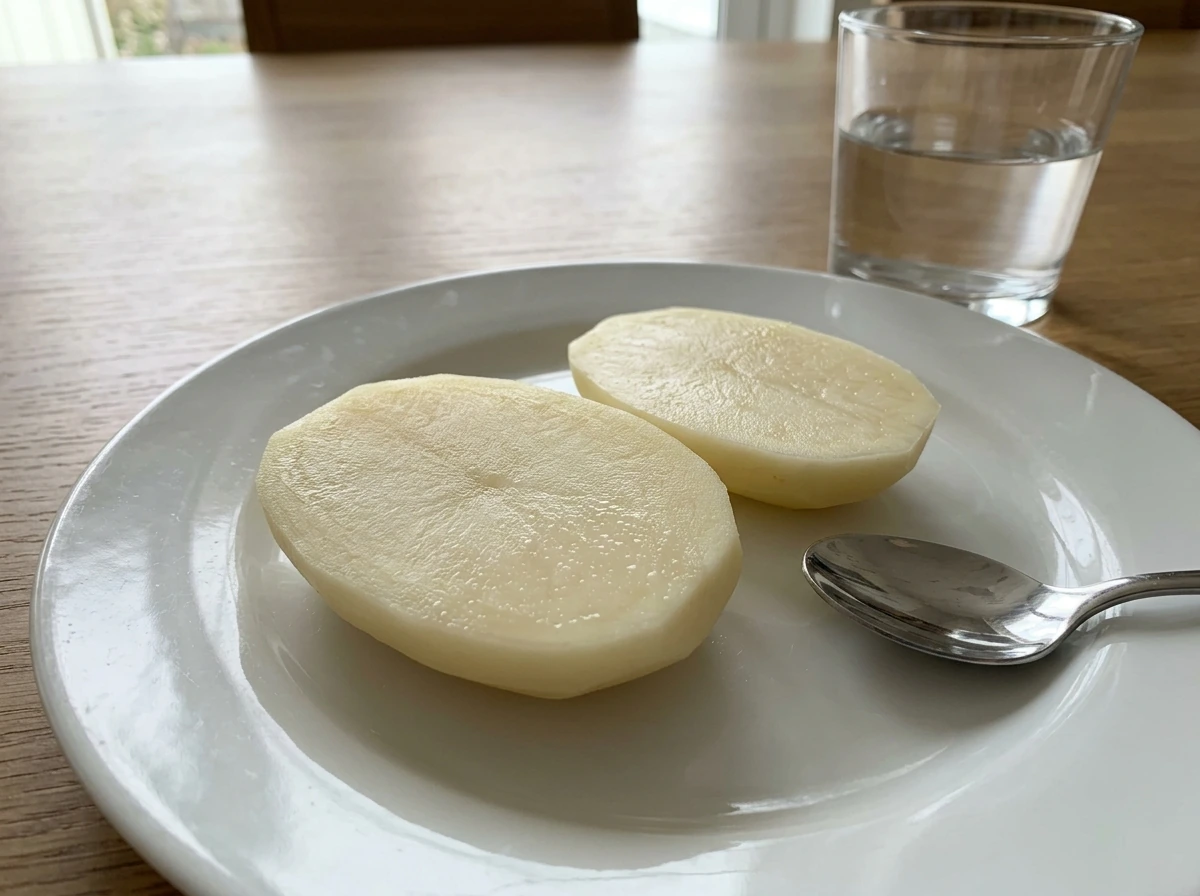
If you've peeled and cut the potato and want a final check, a bitter taste is a clear red flag. Kansas State University Extension puts it plainly: do not eat a potato that tastes bitter. Bitterness is a reliable indicator that glycoalkaloid levels are elevated. Spit it out, don't swallow, and compost the potato.
What to do if they're only lightly sprouted (salvage and preparation)
Iowa State University Extension gives a practical salvage rule I think is the most useful one out there: if the potato is firm and has only small sprouts at the eyes with skin-deep greening (if any), you can cut away all the sprouts and any green-tinged areas, then cook and eat the rest. Here's how to do it properly.
- Snap or cut off all sprouts at the base, removing a small margin of potato flesh around each sprout eye.
- Peel the entire potato, cutting deeper than normal if there's any green tinge near the surface.
- Cut the peeled potato in half and look at the flesh. It should be pale yellow or white with no green areas.
- If the flesh looks clean, cook it normally. Boiling and then discarding the water can help reduce any residual glycoalkaloids slightly, though it won't eliminate them entirely.
- Do a quick taste check of a small cooked piece before serving. Discard immediately if it tastes bitter.
Keep in mind that smaller potatoes need more careful handling here. Because the peel makes up a larger fraction of a small tuber's weight, smaller potatoes tend to have a higher glycoalkaloid load relative to their edible flesh. Oregon State University Extension specifically flags smaller and immature tubers as higher risk and notes that peeling them is especially important if any greening is present.
When to toss them: green, bitter, soft, or extensively sprouted
There's a version of 'borderline' that isn't worth the trouble or the risk. Here's when to skip the assessment and go straight to the compost bin.
- Deep green flesh when cut: The glycoalkaloids have penetrated beyond the peel and no amount of cutting will fully remove them.
- Extensive sprouting with multiple long sprouts, especially combined with shriveling or soft spots: The potato has been under stress for a long time and is past its safe eating window.
- Bitter taste even after peeling: This signals elevated glycoalkaloid levels throughout the flesh.
- Soft, mushy, or rotten areas: Beyond toxin concerns, rot introduces bacterial contamination that makes the potato unsafe regardless of solanine levels.
- Strong or off smell: Any fermented, sour, or unpleasant odor means the potato is gone.
Michigan State University Extension takes a conservative stance and recommends discarding green-skinned and sprouted potatoes outright, noting that while many people won't get sick because the dose has to be high, gastrointestinal symptoms (nausea, vomiting, diarrhea) are a real possibility. That's a reasonable approach if you have any doubt. If you're feeding kids, elderly family members, or anyone with a sensitive gut, err on the side of discarding.
Cooking and storage tips to reduce solanine and prevent sprouting next time
What cooking actually does (and doesn't do)
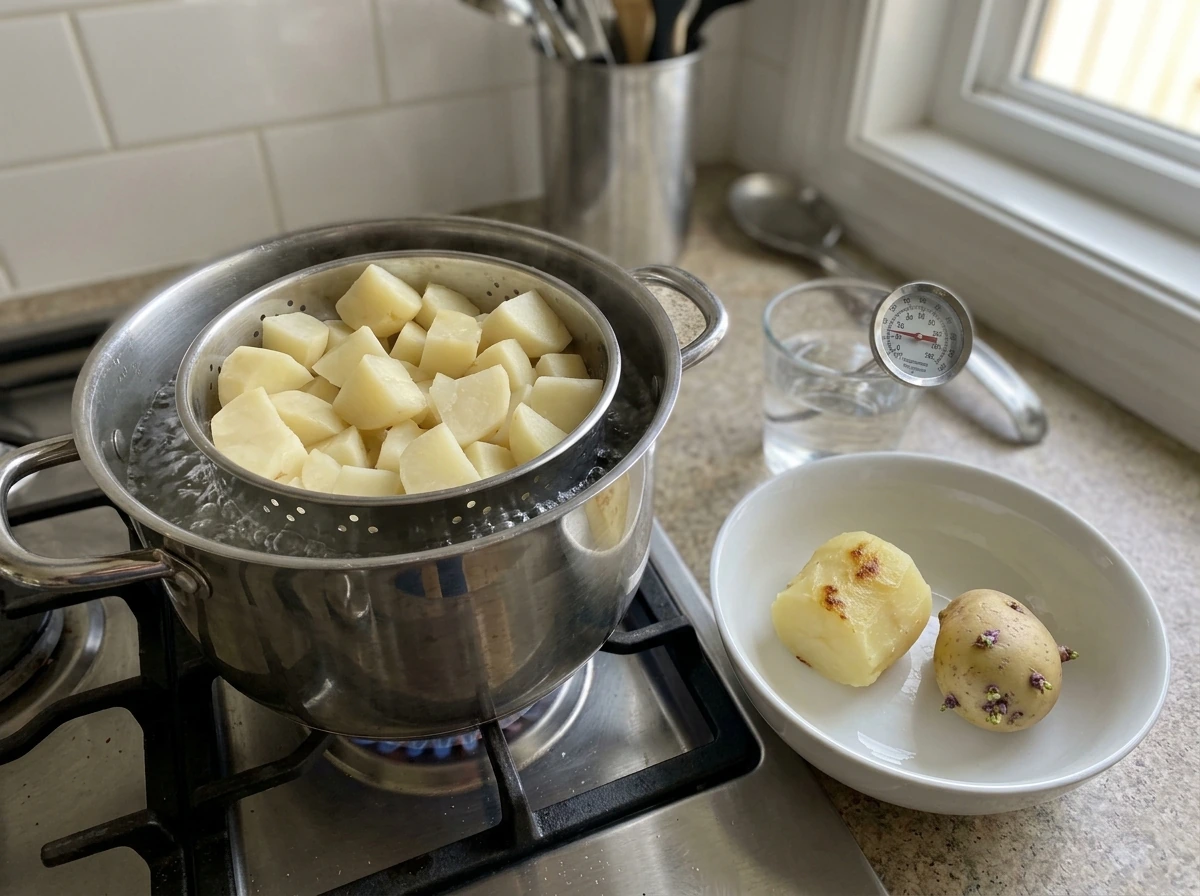
This is where a lot of people get caught off guard. Cooking does not destroy solanine or chaconine. The WHO's food safety assessment on these compounds confirms that boiling, baking, frying, and microwaving all leave glycoalkaloid levels essentially intact. So the idea that you can rescue a very green or badly sprouted potato by cooking it thoroughly is a myth. Preparation (peeling, cutting away affected areas) is what reduces your exposure, not heat.
How to store potatoes to slow sprouting
The biggest levers you have are temperature, light, and humidity. Oregon State University Extension recommends storing potatoes in the dark at 5 to 8 degrees Celsius (41 to 46 degrees Fahrenheit) to prevent sprouting and keep glycoalkaloid levels from rising. That's a cool, dark pantry, a root cellar, or a dedicated crisper drawer kept away from light. Here's what to control:
- Keep them in total darkness: light exposure triggers both greening (chlorophyll) and glycoalkaloid production. Even ambient kitchen light over time causes greening.
- Store between 41 and 46°F (5 to 8°C): warmer temps accelerate sprouting; colder temps can convert starch to sugar and affect texture.
- Don't store near onions or apples: both release ethylene gas, which speeds up sprouting.
- Keep them dry but not bone-dry: high moisture causes rot; very low humidity causes shriveling.
- Don't wash potatoes before storing: moisture accelerates decay. Wash right before cooking.
Also worth knowing: mechanical damage to potatoes, including cutting and slicing, can actually stimulate more glycoalkaloid formation. Oregon State University Extension flags this specifically. That means if you cut away sprouts from one potato in a storage bag and leave the rest jostling around with exposed cuts, you may be accelerating the problem. Handle stored potatoes gently and try to assess them whole before cutting.
Eating vs. planting: when sprouted potatoes are actually more valuable in the ground
Here's the upside of a sprouted potato: if you're a home gardener, a potato with developed sprouts (called 'chits') at the eyes is actually closer to ready for planting than a fresh one. Utah State University Extension describes a process called 'chitting' or 'green sprouting,' where you lay seed potatoes out one layer deep with the eyes up about six weeks before your planting date to encourage sprout development and accelerate emergence once planted. So that potato sitting in your cabinet that's growing sprouts is essentially doing exactly what it should be doing if it were destined for the garden.
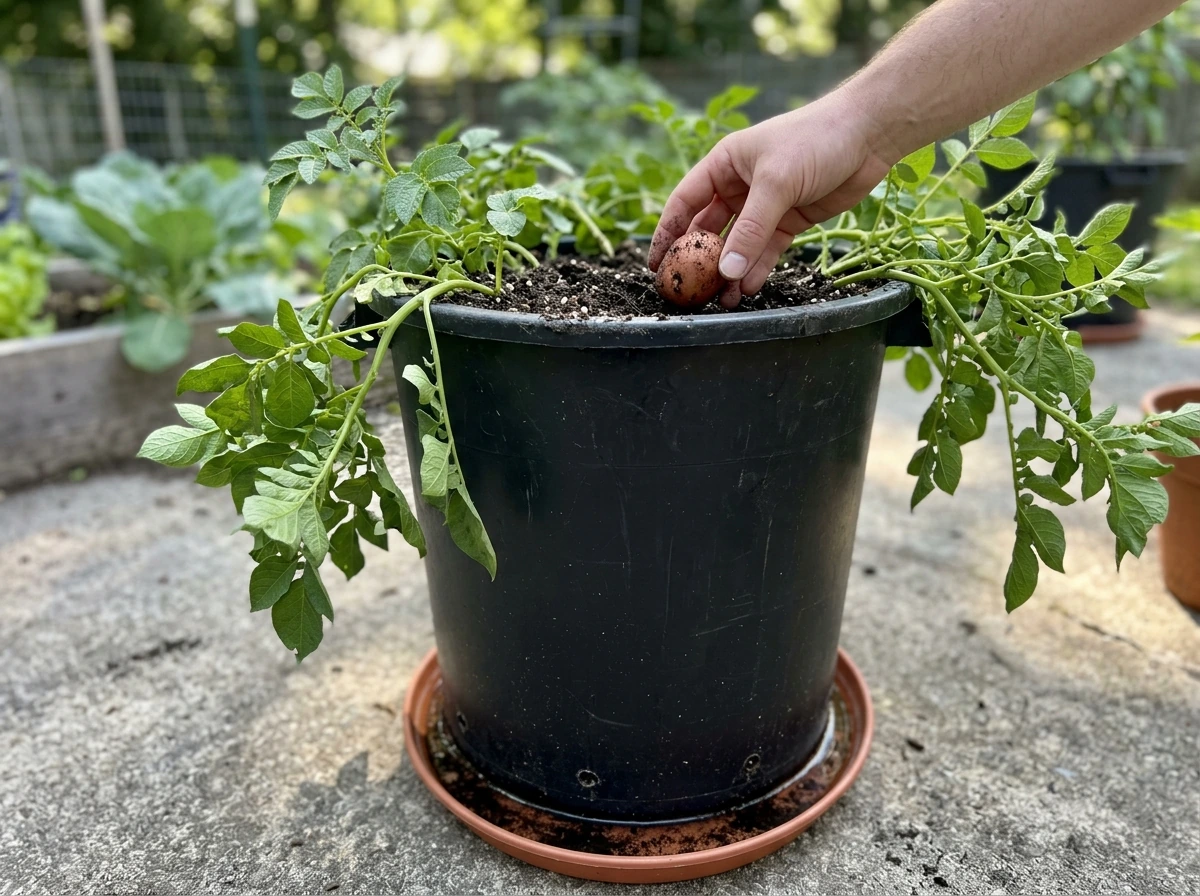
If you have a moderately sprouted potato that you're on the fence about eating, ask yourself: is it planting season, or close to it? If you're within a few weeks of your last frost date, that sprouted potato might be more valuable as a seed potato than as dinner. For planting, Iowa State University Extension recommends cutting seed pieces so each contains one or two eyes and weighs roughly 1.5 to 2 ounces. After cutting, let the pieces cure in a humid environment at 60 to 70°F for a day or two to let the cut surfaces heal before planting. For planting, Iowa State University Extension recommends cutting seed pieces so each contains one or two eyes and weighs roughly 1.5 to 2 ounces. After cutting, let the pieces cure in a humid environment at 60 to 70°F for a day or two to let the cut surfaces heal before planting. If you want to explore this further, growing potatoes in a container (even a trash can) is a great low-space option for using up sprouted potatoes you wouldn't feel confident eating.
| Scenario | Eat it? | Plant it? | Toss it? |
|---|
| Firm, small sprouts, no greening | Yes, remove sprouts and peel | Yes, good seed candidate | No |
| Firm, small sprouts, light surface greening | Yes, peel deeply, check flesh | Yes | No |
| Firm, extensive sprouts, no greening | Marginal, better to plant | Yes, ideal | If bitter |
| Soft/shriveling, long sprouts | No | Poor quality seed | Yes |
| Any green flesh when cut | No | Not recommended | Yes |
| Rotten or foul smell | No | No | Yes |
| Bitter taste after peeling | No | Possible, but low yield likely | Yes |
Can you eat potato shoots or microgreens? The straight answer
This is a question that trips people up because microgreens from many other vegetables are completely safe and trendy right now. Potato is a different story. North Carolina State University's Plants for Human Health Institute specifically warns: do not eat shoots from potato plants. Potatoes are nightshades, and the green above-ground tissue, including the sprout ends that grow from storage potatoes, contains concentrated glycoalkaloids. This isn't a gray area.
The sprout itself that grows from the eye is not the same thing as a potato microgreen, and neither one is safe to eat. When you're preparing a sprouted potato for eating, you remove and discard the sprout. You do not eat it. When people grow 'potato microgreens,' they are growing the green shoot that emerges from the seed potato, and that shoot is part of the nightshade plant, if you’re wondering why someone couldn’t grow potatoes in a particular situation like on Mars, see our guide to the martian can you grow potatoes. the martian can you grow potatoes Unlike sunflower or pea microgreens, which come from seeds with edible sprouts, potato shoots accumulate the same solanine and chaconine that make green potatoes dangerous. Avoid eating them.
The safe, edible part of the potato is the tuber: the flesh and starchy interior. Everything that grows above ground from a potato, including sprouts, shoots, leaves, and berries, should be treated as toxic until you know better, and for most practical purposes, that means keeping it out of your kitchen and off your plate.