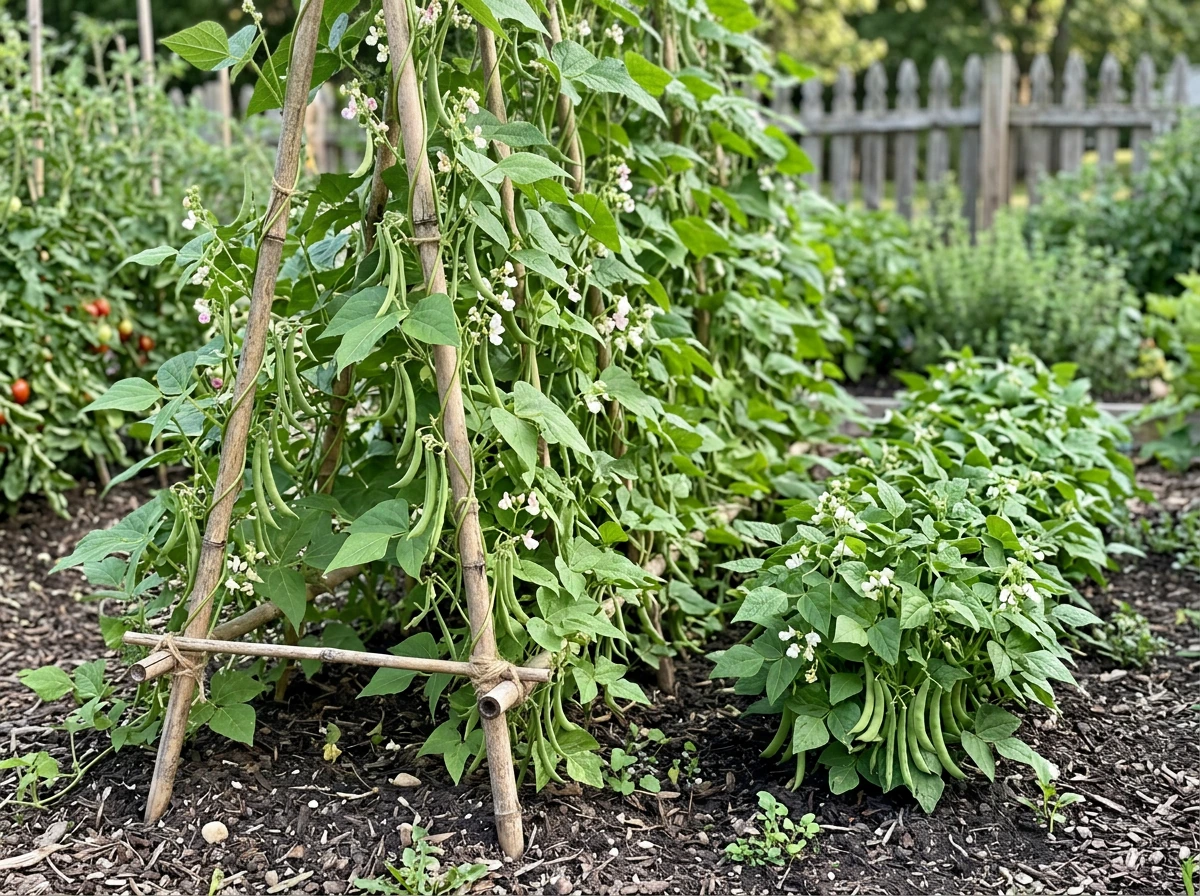
Yes, beans absolutely grow food. They're one of the most productive, reliable crops you can put in a home garden, and depending on the type you choose, you can harvest fresh green pods in as little as 50 days or dry beans for long-term storage from the same plants. If you're trying to figure out whether beans are worth growing for actual eating, the short answer is: they're one of the best food crops you can start with.
Is Beans Grow Food? How to Grow Edible Beans at Home
Marcus Hendrick
24 Mar 2026
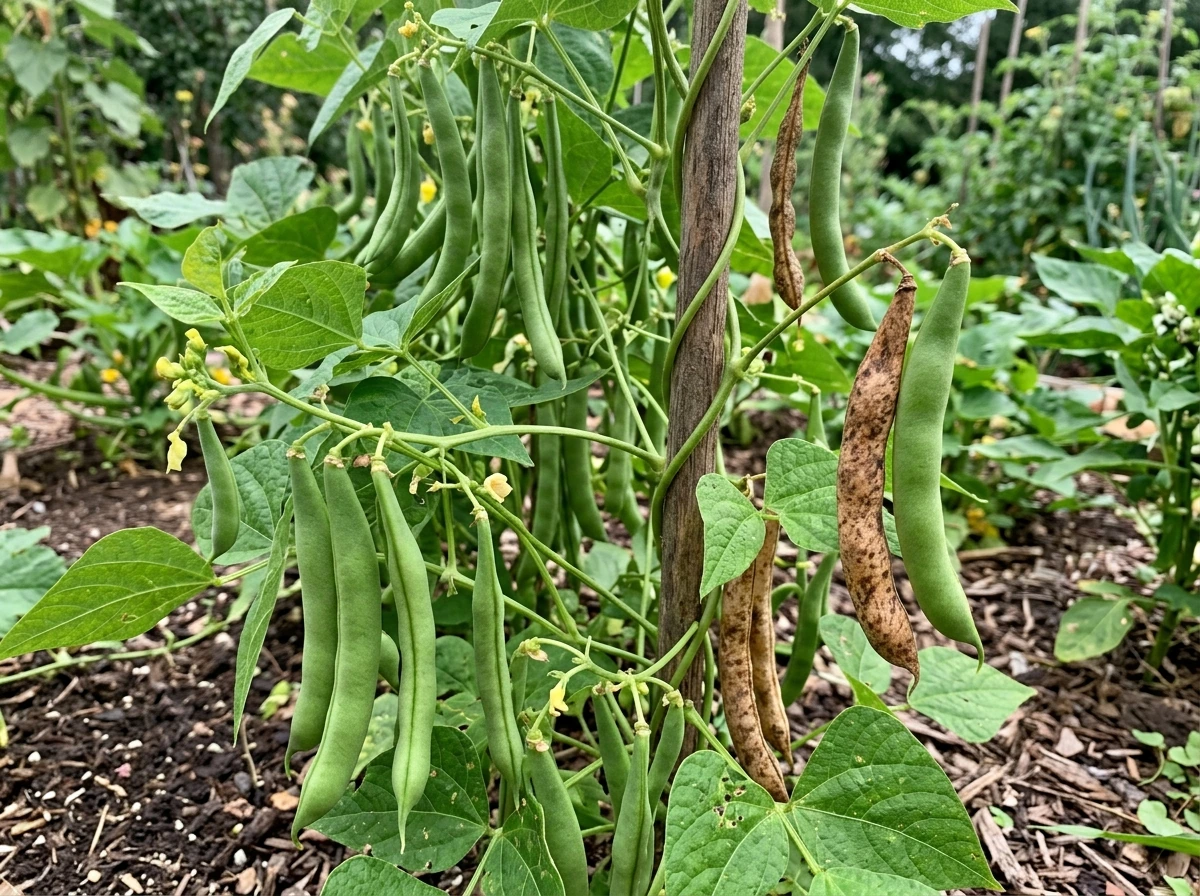
Do beans actually grow food? Here's what you're harvesting
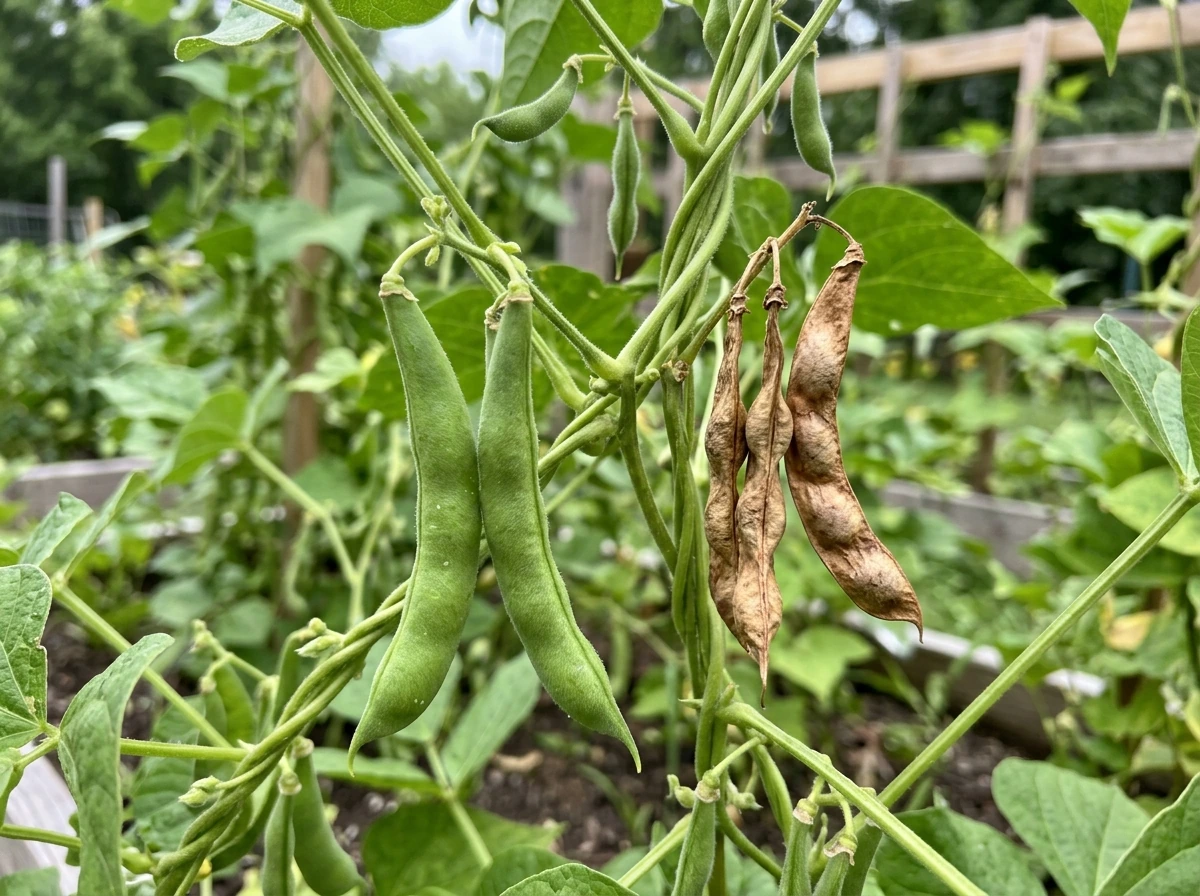
Beans produce food in two distinct ways, and understanding this changes how you grow and plan for them. The first is the fresh green pod (also called a snap bean, green bean, or string bean). You harvest these while the pod is still young and tender, before the seeds inside start to bulge. The whole pod is edible, and this is what most people picture when they think of garden beans. The second way is the dry bean, where you let the pods mature fully on the plant, wait until the seeds harden inside, and then harvest those dried seeds to cook. Think black beans, navy beans, kidney beans, and pinto beans.
Both come from the same plant family and many of the same growing steps, but your harvest timing and storage approach are completely different. Some varieties are bred specifically for fresh eating, some for dry beans, and some (called dual-purpose or shell beans) can do both depending on when you pick them. The important thing to know: no matter which direction you go, you are growing real, calorie-dense, nutritious food.
Types of beans and what they actually produce
Before you plant anything, you need to decide on two things: what you're going to eat (fresh pods or dried seeds) and how the plant grows (bush or pole). These two decisions together determine your spacing, your support structure, and your harvest plan.
Fresh (snap) beans vs dry beans
Snap beans, including the classic green bean and yellow wax bean, are grown for the immature pod. You pick them young, cook them fresh, or preserve them by canning or freezing. Most bush snap bean varieties mature in about 50 to 65 days. Pole snap bean varieties can take up to 70 days but will keep producing over a longer window. Dry beans are grown for the mature seed inside the pod. These take considerably longer, sometimes up to 110 days depending on the variety, but the payoff is a shelf-stable food you can store for months or years.
Bush beans vs pole beans
Bush beans grow as compact, self-supporting plants, usually 1 to 2 feet tall. They tend to produce their crop all at once over a few weeks, which makes them great for preserving or if you want a predictable harvest window. Pole beans (also called runner beans or climbing beans) grow vertically on a trellis or support, reaching 6 to 8 feet or more. They take a bit longer to start producing but then keep going for weeks, giving you a more continuous harvest. Pole beans also produce more food per square foot of ground than bush beans, which matters if your garden space is limited. There's also a third type called half-runners, which are a middle ground between the two but are less commonly grown.
| Type | Growth Habit | Days to Harvest | Best For | Support Needed |
|---|---|---|---|---|
| Bush snap bean | Compact, 1–2 ft | 50–65 days | Fresh eating, canning/freezing | No |
| Pole snap bean | Climbing, 6–8 ft | 60–70 days | Continuous harvest, small spaces | Yes (trellis/poles) |
| Bush dry bean | Compact, 1–2 ft | 85–100 days | Dry storage, self-sufficiency | No |
| Pole dry bean | Climbing, 6–8 ft | 90–110 days | High yield in small space, storage | Yes (trellis/poles) |
My recommendation: if you're new to growing beans, start with a bush snap bean. They're fast, forgiving, and you'll be eating fresh green beans in under two months. Once you've got the basics down, add a row of pole beans for a longer harvest, and experiment with a dry bean variety if you're thinking about food storage or self-sufficiency. If you're curious about whether a can of beans can grow a garden, that's a different question worth exploring separately.
How to grow beans successfully at home
Timing and soil temperature
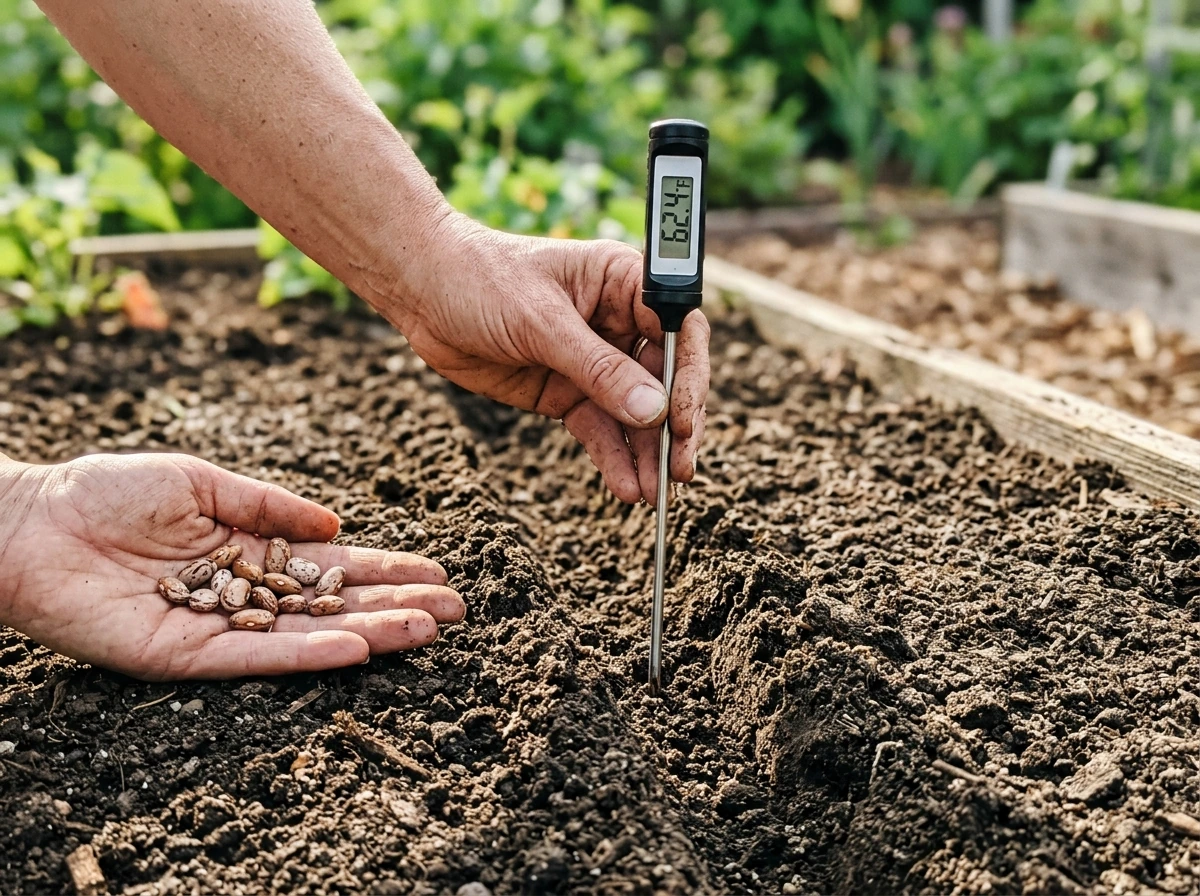
Beans are a warm-season crop. They cannot handle frost, and cold soil will kill your germination rate. Don't plant until after your last frost date and, more importantly, until the soil has warmed to at least 60°F. Bean seeds germinate best between 60 and 80°F, and you can expect them to sprout in about 6 to 10 days once the soil is in that range. If you plant in cold, wet soil, the seeds will just sit there and rot. Wait for the warmth.
Direct sow beans into the garden rather than starting them indoors. Beans don't transplant well because their roots are easily disturbed, and there's no real benefit to the head start since they grow so quickly from seed.
Sun, soil, and site
Beans want full sun, at least 8 to 10 hours of direct sunlight per day. Less than that and you'll get leggy plants and poor pod set. For soil, beans do best in well-drained clay loam with a pH between about 6.0 and 6.2. If you're growing in sandier soil, lima beans actually prefer that texture, but common snap and dry beans want something with a bit more body. Run a soil test before you plant if you can; it'll tell you whether you need to adjust pH with lime or address phosphorus and potassium levels. Don't just assume more fertilizer will fix yield problems.
Planting depth and spacing
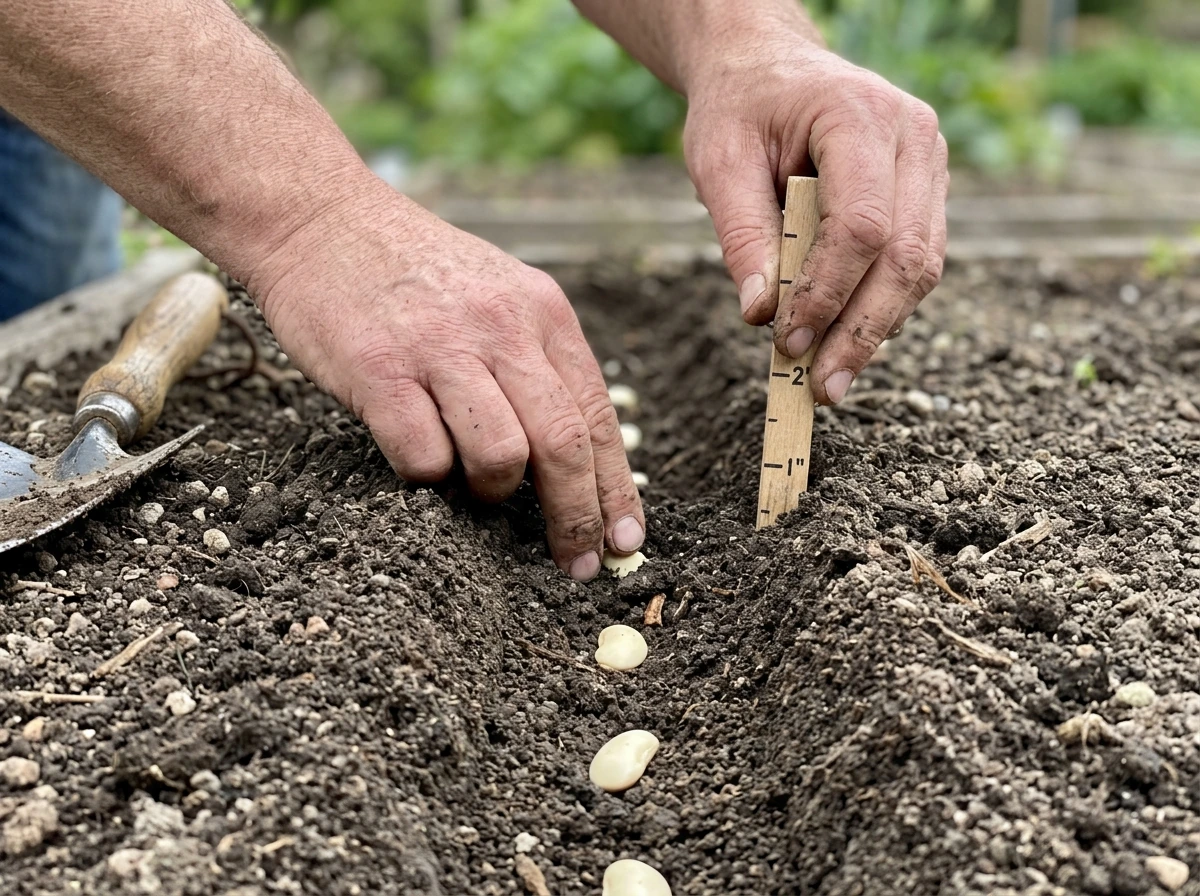
Plant bean seeds about 1 to 1.5 inches deep, pushing that closer to 2 inches if your soil is dry at planting time. For bush beans, space seeds about 2 to 4 inches apart in the row, with rows 18 to 24 inches apart. For pole beans, plant seeds close together in clusters around each pole or in rows along a trellis, spacing clusters about 6 inches apart. The plants will climb, so crowding at the base is less of an issue than it is with bush varieties.
To soak or not to soak
Some gardeners soak bean seeds overnight before planting to speed up germination. It can help in dry conditions, but be careful: soaking too long causes the seeds to split and rot before they even get in the ground. If you do soak, limit it to 4 to 8 hours, not overnight or longer.
Watering
Beans need consistent moisture, especially during flowering and pod development. Aim for about 1 inch of water per week. Water at the base of the plants rather than overhead. Wet foliage is an open invitation to fungal disease, which is a real problem with beans. Drip irrigation or a soaker hose is ideal. Inconsistent watering during flowering (too dry, then too wet) is one of the main causes of blossom drop, which means fewer pods and lower yields.
Fertilizing
Here's something that surprises a lot of new bean growers: beans don't need much fertilizer, especially nitrogen. beans don't need much fertilizer, especially nitrogen. Over-feeding with nitrogen actually encourages leafy green growth at the expense of flowers and pods, and can even contribute to blossom drop. Work some compost into your soil before planting, get your soil pH right, and let the plants do their thing. If your soil test shows low phosphorus or potassium, address those specifically.
Supporting pole beans
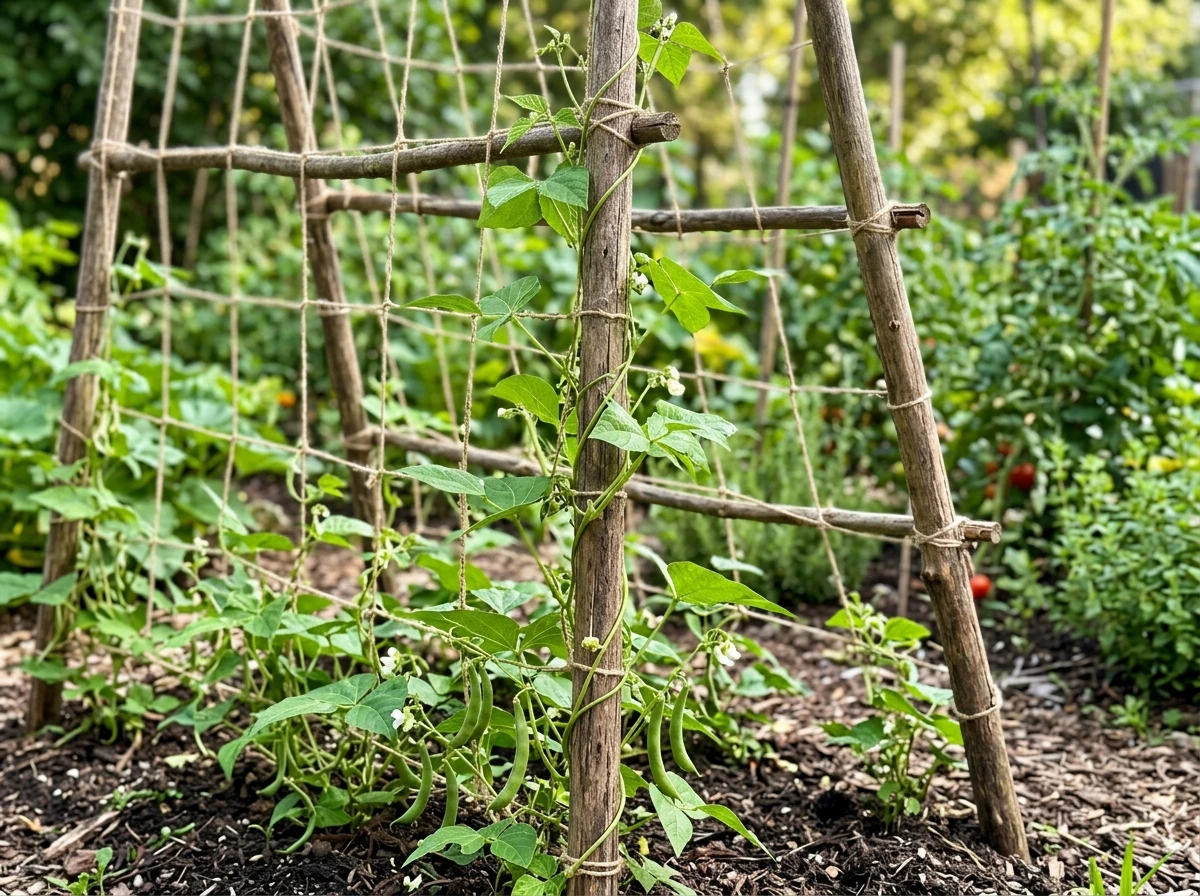
Pole beans need a trellis, poles, or some kind of vertical support from day one. They'll start climbing almost immediately and can reach 6 to 8 feet. A simple structure with wooden stakes or bamboo poles and horizontal twine works well. You can also use a cattle panel leaned against a fence, or build a classic teepee with 3 to 4 poles tied at the top. Whatever you use, set it up before or at planting, not after the plants are already growing and tangled. If you want a deeper look at support options for different bean types, that's worth its own read.
Successive planting for a longer harvest
Rather than planting all your bush beans at once and getting hit with a massive harvest that's over in two weeks, sow a new small batch every 2 to 3 weeks through early summer. This staggers the harvest window and gives you a steady supply of fresh beans from early summer into fall. Pole beans handle this differently because they keep producing on their own for weeks, so one planting often does the job.
Common problems and how to fix them
Pests
Bean leaf beetles are one of the most common early-season pests. The adults chew holes in the leaves, and when plants are still small, this damage can seriously set them back. Monitor your plants daily when they're young. If you see small, round holes in the leaves with beetles nearby, act quickly. Row covers right after planting can prevent this entirely if beetles are a known problem in your area. Cucumber beetles and thrips can also show up, particularly once plants are flowering.
Diseases
Fungal diseases are the biggest disease threat to beans, and most of them are preventable with good cultural practices. Anthracnose, a fungal disease that causes dark lesions on pods and stems, can be largely avoided by starting with certified disease-free seed, watering at the base (never overhead), and rotating your bean planting location every 2 to 3 years. Fusarium root rot is another issue, usually showing up in cold, waterlogged soil, which is another reason to wait for warm, well-drained conditions before planting.
Blossom drop and poor pod set
If your bean plants look healthy and are flowering but the blossoms fall off without forming pods, that's blossom drop. It's an environmental disorder, not a disease, and the causes are usually heat stress (temperatures above about 90°F during flowering), inconsistent watering, or excess nitrogen fertilizer. High humidity with high temperatures is a classic combo for blossom drop. The fix is mostly preventive: plant at the right time so flowering doesn't happen during a heat wave, keep watering consistent, and don't over-fertilize. A less common cause is boron deficiency, which can cause flower buds to shrivel and drop before opening. If blossom drop is persistent and you've ruled out heat and water stress, a soil test is worth doing to check micronutrient levels.
Poor germination
If your seeds aren't sprouting, the most likely culprits are cold soil (below 60°F), soil that's too wet and causing seed rot, or seeds that were soaked too long before planting. Check your soil temperature with a cheap thermometer before you sow. If you're getting patchy germination in a row, dig up a few unsprouted seeds and check whether they've rotted. If they have, it's a moisture or temperature issue.
Flat or misshapen green bean pods
If your pods are coming out flat or oddly shaped instead of plump and round, that's typically a pollination or water stress issue during pod fill. Flat pods without developed seeds inside can also be caused by pest damage to flowers or extreme heat at flowering. Consistent moisture and planting during appropriate temperatures makes a significant difference here.
When and how to harvest beans
Harvesting snap (green) beans
For green beans, timing is everything. You want to pick the pods while they're still young and the seeds inside haven't started to bulge out the sides of the pod. The pod should snap cleanly when you bend it, hence the name snap bean. Most varieties are ready about 50 to 65 days after planting. Check your plants every 2 to 3 days once they start producing. If you let pods get too mature, the plant slows down production. Regular picking actually encourages more pods to form, especially with pole beans.
Harvesting dry beans
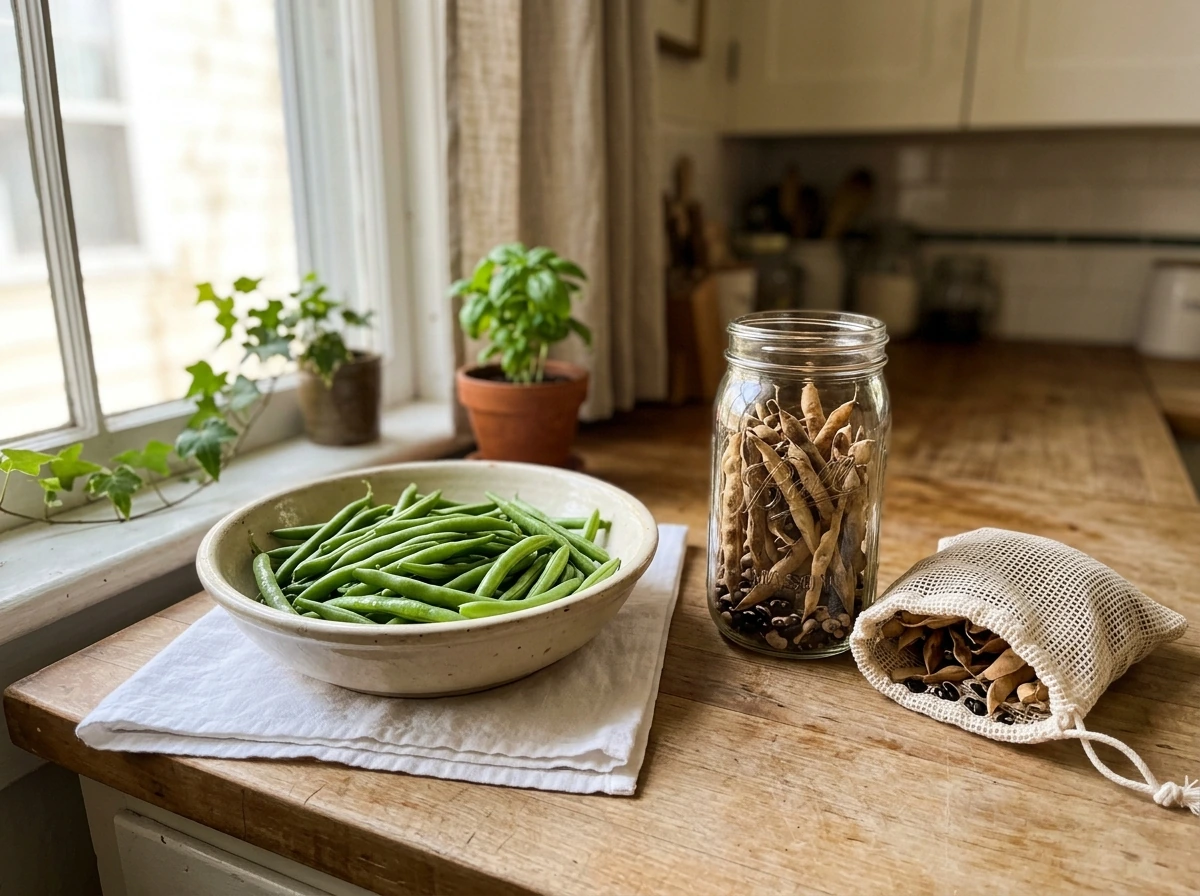
For dry beans, leave the pods on the plant until the seeds have fully hardened inside. The pods will start to brown and become papery, and you'll be able to hear the seeds rattle when you shake the pod. One thing to know: the pods and seeds dry down before the plant stems do, so don't wait for the whole plant to look dead before harvesting. Focus on seed hardness and pod color rather than the overall plant appearance. If frost is coming and your beans aren't quite dry enough, pull the whole plant and hang it upside down in a warm, dry place to finish drying.
Storing what you harvest
Fresh green beans can be refrigerated for about a week, or blanched and frozen for longer storage. For canning, you'll need a pressure canner since beans are a low-acid food. For dry beans, the key number is moisture content. Beans need to be dried down to about 14% moisture for safe long-term bulk storage. If you're storing smaller quantities in sealed jars at home, getting them closer to 11% moisture is even better for multi-year storage. Test dryness by pressing a fingernail into the seed: it should leave no dent. If the seed dents, it needs more drying time. Store dry beans in airtight containers in a cool, dark location and they'll keep for a year or more without quality loss.
Realistic yield expectations and planning for your household
Before you plant, it helps to know how much you actually need to grow to make a difference in your food supply. A practical rule of thumb for green beans is about 15 to 16 feet of planted row per person per season. That gives you enough for fresh eating plus a reasonable amount to preserve. Texas A&M's home vegetable planning guides use similar per-person row-length figures for both bush and pole beans as separate planning entries, since pole beans produce more per linear foot.
If you're thinking in terms of containers or raised beds rather than row feet, pole beans are the clear winner because their vertical growth means you're getting much more food from the same footprint. A single 4x4 raised bed planted with pole beans on a trellis can realistically feed one person's worth of fresh beans for much of the summer with successive plantings.
For dry beans aimed at real food security or self-sufficiency, the math shifts. Dry beans are calorie-dense (about 670 calories per pound dry weight) and store for years, making them one of the best crops to scale up if you're planning a larger homestead garden. The trade-off is that they need a full season (often 85 to 110 days) and a larger growing area to produce meaningful quantities. A 100-foot row of dry beans can yield roughly 30 to 50 pounds of dried beans, depending on variety and conditions. That's a significant contribution to a pantry.
To plan practically: start by calculating how many meals per week you want beans to cover, then work backwards to row length or bed space. If your household eats beans twice a week, a mix of 30 to 40 feet of successive-planted snap beans plus a 25 to 30 foot section of dry beans gives you a solid combination of fresh summer eating and winter pantry stock. Adjust based on your growing season length. Short seasons (under 120 frost-free days) may limit your dry bean options, so stick to shorter-season varieties like black beans or navy beans, which tend to mature faster than larger-seeded types.
Growing beans also ties naturally into broader garden planning, including companion planting (beans fix nitrogen that benefits neighboring crops), crop rotation (important for disease management), and understanding what nutrients your specific soil needs to support a productive crop. Getting those fundamentals right early makes every season more productive than the last.
FAQ
If I grow beans, will I actually be able to eat them right away, or are they only for storage?
Yes, but only if you grow the right type. Bush and pole snap (green) beans are harvested young as pods, while dry beans are harvested after the pods fully mature and the seeds harden. If your goal is “food you store for months,” you usually want dry beans, not snap beans.
Can beans grow food in a short summer climate?
In practice, they can be, but you must plan for warmth and flowering. Beans need soil at least around 60°F and they do poorly if flowering overlaps a hot spell, often above about 90°F. In very short or cool summers, choose shorter-season bush varieties or early-maturing types.
Can I plant beans earlier if I use protection like row covers?
Beans are warm-season and do not reliably handle cold snaps. A frost can damage plants, and cold, wet soil commonly causes seed rot, so you typically need to wait until both air and soil are warm enough. Using a row cover can help after planting, but it will not fully replace waiting for proper soil temperature.
Is it worth starting bean seeds indoors for a head start?
Don’t start beans indoors in most home gardens, because their roots are easily disturbed and they hate being transplanted. Direct sowing works best, and since they sprout within about a week once soil is warm, you usually do not lose meaningful time.
Why do my bean flowers fall off before pods form, even though the plants look healthy?
Moisture management matters more than “more water.” If watering swings between too dry and too wet during flowering, you may get blossom drop, which reduces pods. Aim for steady moisture and water at the base using drip or a soaker hose, so the soil stays consistently damp but not waterlogged.
Should I soak bean seeds overnight to improve germination?
Yes, but avoid soaking for too long. If you soak longer than about 8 hours, seeds can crack and rot in the ground. If your garden is dry, a short soak (4 to 8 hours) can help, otherwise it is often unnecessary.
Do beans need fertilizer, and how do I avoid overfeeding nitrogen?
It depends on the fertilizer and your soil test. Beans generally need little extra nitrogen, and too much nitrogen can push leafy growth while reducing flowering and pod set. If your test is low in phosphorus or potassium, correct those specifically instead of adding general fertilizer.
What should I do if only some of my bean seeds sprouted?
If you planted into cold or wet soil, seeds can sit and rot rather than sprout. Check soil temperature with a thermometer, ensure the bed drains well, and confirm your planting depth is not too shallow in dry soil or too deep in dense, wet soil. Patchy germination is often a moisture and temperature issue rather than a seed-quality issue.
Can I save dried beans for long-term storage from my garden?
Yes, provided you harvest in the correct stage and dry them properly. Green pods can go straight to the fridge briefly, while dry beans require drying down to about 14% moisture for safe bulk storage (around 11% for better long-term jar storage). Always let dry beans reach the right dryness before storing.
How often should I harvest beans to keep getting more pods?
For green beans, pick when pods are tender and snap cleanly, and check every 2 to 3 days once you start harvesting. For pole beans especially, frequent picking tells the plant to keep producing; letting pods over-mature can slow yields.
My bean pods are coming out flat or oddly shaped, what causes that?
If your pods look flat or misshapen, it usually points to stress during pod fill, most commonly inconsistent watering or temperature extremes around flowering and early development. Pest damage to flowers can also contribute, so inspect for feeding or chewed blooms.
When is row covering actually helpful for bean pests?
A row cover is most useful early, especially against leaf beetles right after planting. Once plants are flowering, you generally need to manage pollination access, so plan to remove covers at the right time rather than leaving them on indefinitely.
Do I need to rotate bean beds, or can I plant beans in the same place every year?
Yes, and it starts with where you plant. Rotate beans away from the same spot for at least 2 to 3 years to reduce fungal and soil-borne disease pressure. Also use disease-free seed if you have had problems like anthracnose before.
How can I plan bean planting so I am not overwhelmed with one short harvest?
If you need beans to feed you longer than one harvest wave, mix timing and growth habits. Stagger bush snap bean plantings every 2 to 3 weeks, and rely on pole beans for a longer, ongoing harvest from a single sowing. This combination gives fresh pods plus extended supply.
Next Article
Do Beans Need Support to Grow? Bush vs Pole Guide
Do beans need support? Learn bush vs pole needs, when to install trellises, how to train vines, and what happens if you